
How Long Does It Take to Build a Luxury Pool

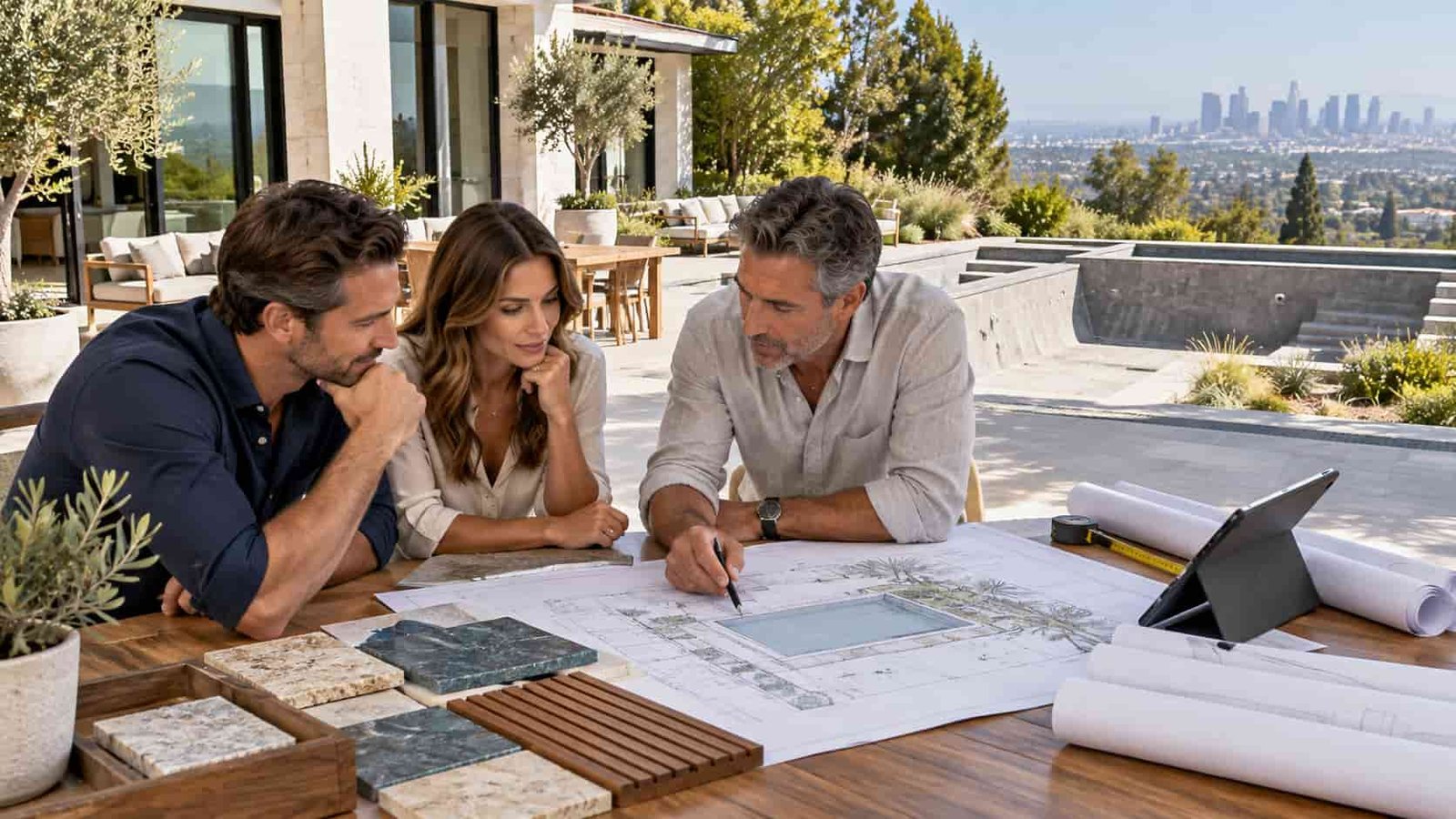
How long does it take to build a luxury pool? There is no single timeline that applies to every project. A custom pool may move from design to completion relatively smoothly, while a more complex project involving engineering, difficult site conditions, specialty materials, integrated landscaping, or multiple luxury features may require substantially more planning and coordination.
The physical construction of the pool is only one part of the process. Design development, engineering, permits, excavation, structural work, finishes, inspections, landscaping, and equipment start-up can all affect the overall schedule. For Los Angeles homeowners, property conditions and local approval requirements can be especially important when establishing a realistic project timeline.
How Long Does It Take to Build a Luxury Pool?
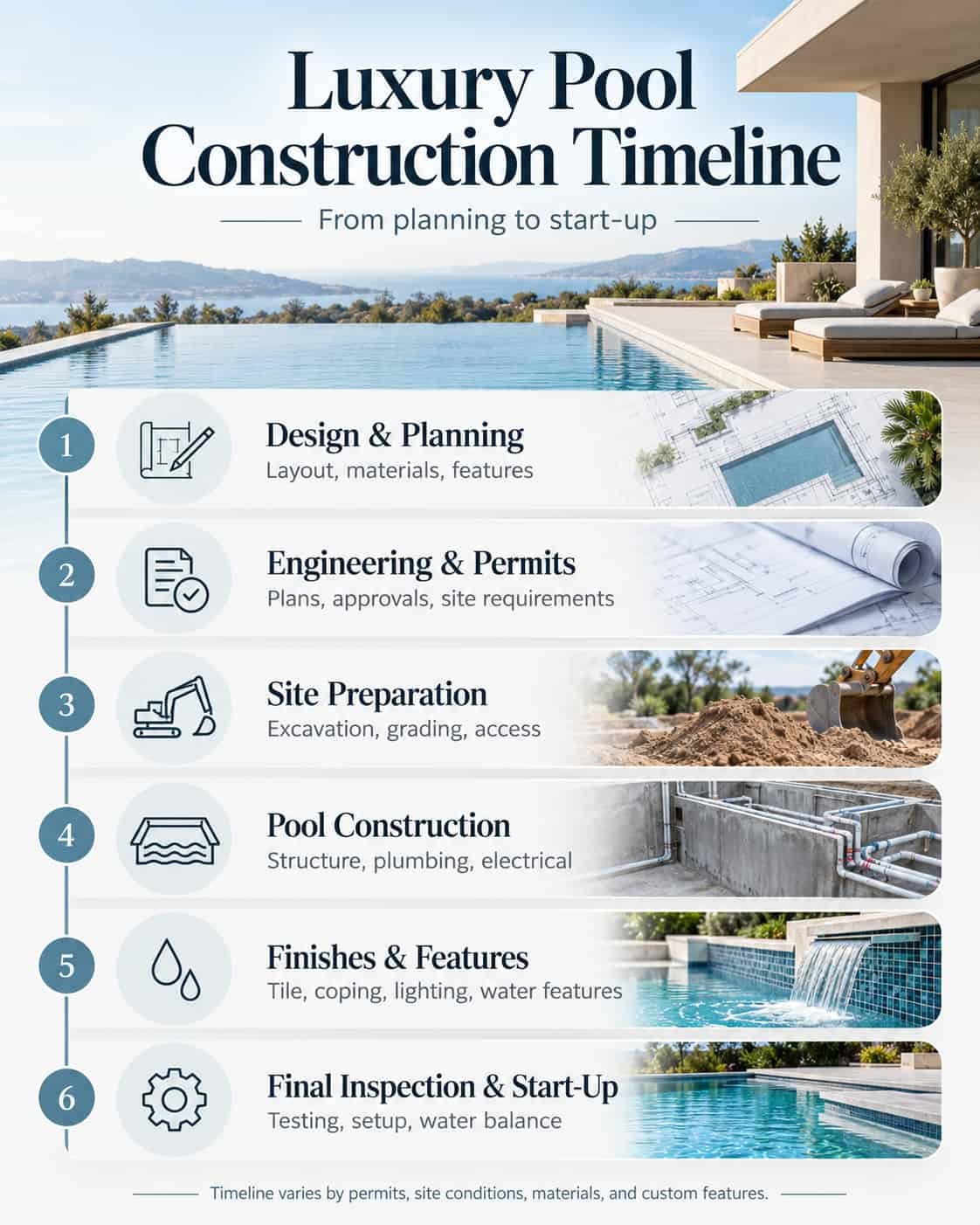
A luxury pool project typically progresses through several stages rather than one continuous construction phase. Some stages may take only several days, while others can extend for weeks or vary substantially depending on the property and project scope.
| Stage | What It Involves | Typical Time |
| Design & Planning | Pool design, layout, materials, features | Varies by project |
| Engineering & Permits | Plans, approvals, structural and site requirements | Varies by location and project |
| Site Preparation | Excavation, grading, demolition if needed | Several days to several weeks |
| Pool Construction | Structure, plumbing, electrical, waterproofing | Several weeks |
| Finishes & Features | Tile, coping, lighting, water features and other details | Several weeks |
| Final Inspection & Start-Up | Testing, finishing and equipment setup | Several days |
These ranges should be used for preliminary planning rather than treated as guaranteed construction schedules. Custom materials, permit reviews, site limitations, design revisions, weather, inspections, and coordination with other contractors can all change the final timeline.
What Is the Typical Luxury Pool Construction Timeline?
Understanding the individual stages makes it easier to see why the answer to how long does it take to build a luxury pool varies so much. A project may involve substantial work before excavation even begins.
1. Initial Consultation and Pool Design
The process begins by determining what can reasonably be built on the property and what the homeowner wants the finished outdoor space to accomplish.
Planning may include assessing the backyard, establishing the pool’s size and shape, deciding on its placement, reviewing circulation around the pool, and determining how it will connect with the home’s architecture and surrounding landscape.
This is also when major materials and features should be discussed. Premium finishes, integrated spas, custom steps, tanning ledges, water features, lighting, and adjoining outdoor living spaces can all influence the design.
Taking enough time during this stage can reduce the likelihood of significant changes after construction begins. Homeowners exploring different configurations may also benefit from reviewing luxury pool design ideas before finalizing the concept.
2. Engineering, Planning, and Permits
After the design is developed, technical plans and approvals may be required before physical construction can begin.
Depending on the project and jurisdiction, this phase may involve structural engineering, grading considerations, drainage planning, equipment specifications, electrical and plumbing plans, and permit review.
In Los Angeles County’s jurisdiction, pools and spas are among the project types for which building permits are available, and custom projects may require a site plan and plan check. Grading work may also involve separate review depending on the property and proposed work.
Permit review can therefore represent a meaningful portion of the overall project schedule, particularly when revisions or additional documentation are needed.
3. Excavation and Site Preparation
Once the necessary approvals are in place, the site can be prepared for construction.
Site preparation may involve:
- Removing existing landscaping or structures
- Establishing construction access
- Excavating the pool
- Moving and removing soil
- Grading portions of the property
- Preparing drainage
- Addressing retaining or structural requirements
A flat, accessible backyard can present a very different construction environment from a hillside property with narrow access.
Soil conditions can also affect this stage. Conditions that were not fully apparent before excavation may require adjustments to the planned work.
4. Pool Structure and Plumbing
After excavation, construction moves into the primary structural and mechanical phase.
Depending on the pool system and design, this stage can include installation of structural reinforcement, construction of the pool shell, plumbing lines, drains, electrical components, lighting infrastructure, equipment connections, and related systems.
Accuracy during this stage is particularly important because many components will eventually be concealed beneath the finished surfaces.
A custom luxury pool construction project may also require coordination between the pool structure and integrated features such as spas, waterfalls, infinity edges, automation, or landscape elements.
5. Interior Finishes and Luxury Features
Once the primary structure and systems are established, the pool begins to take on its finished appearance.
Work may include premium tile, coping, interior finishes, custom lighting, built-in seating, tanning ledges, water features, and other architectural details.
Features such as the following can increase scheduling complexity:
- Integrated spas
- Infinity or vanishing edges
- Specialty tile
- Custom coping
- Waterfalls or fountains
- Fire-and-water features
- Advanced pool lighting
- Automated controls
- Built-in benches
- Baja shelves or tanning ledges
The availability of selected materials also matters. A specialty product that must be fabricated, ordered, or shipped specifically for the project can affect when subsequent work can proceed.
6. Decking, Landscaping, and Outdoor Living
For many luxury projects, completing the swimming pool does not mean completing the backyard.
Pool construction may be coordinated with new decking, patios, landscape design, shade structures, outdoor kitchens, fire features, seating areas, walls, fencing, or architectural upgrades.
Integrating the work can create a more cohesive outdoor space, but it also means that multiple construction activities and trades need to be scheduled correctly.
When a project forms part of a larger property transformation, broader remodeling services may also need to be coordinated with the pool work.
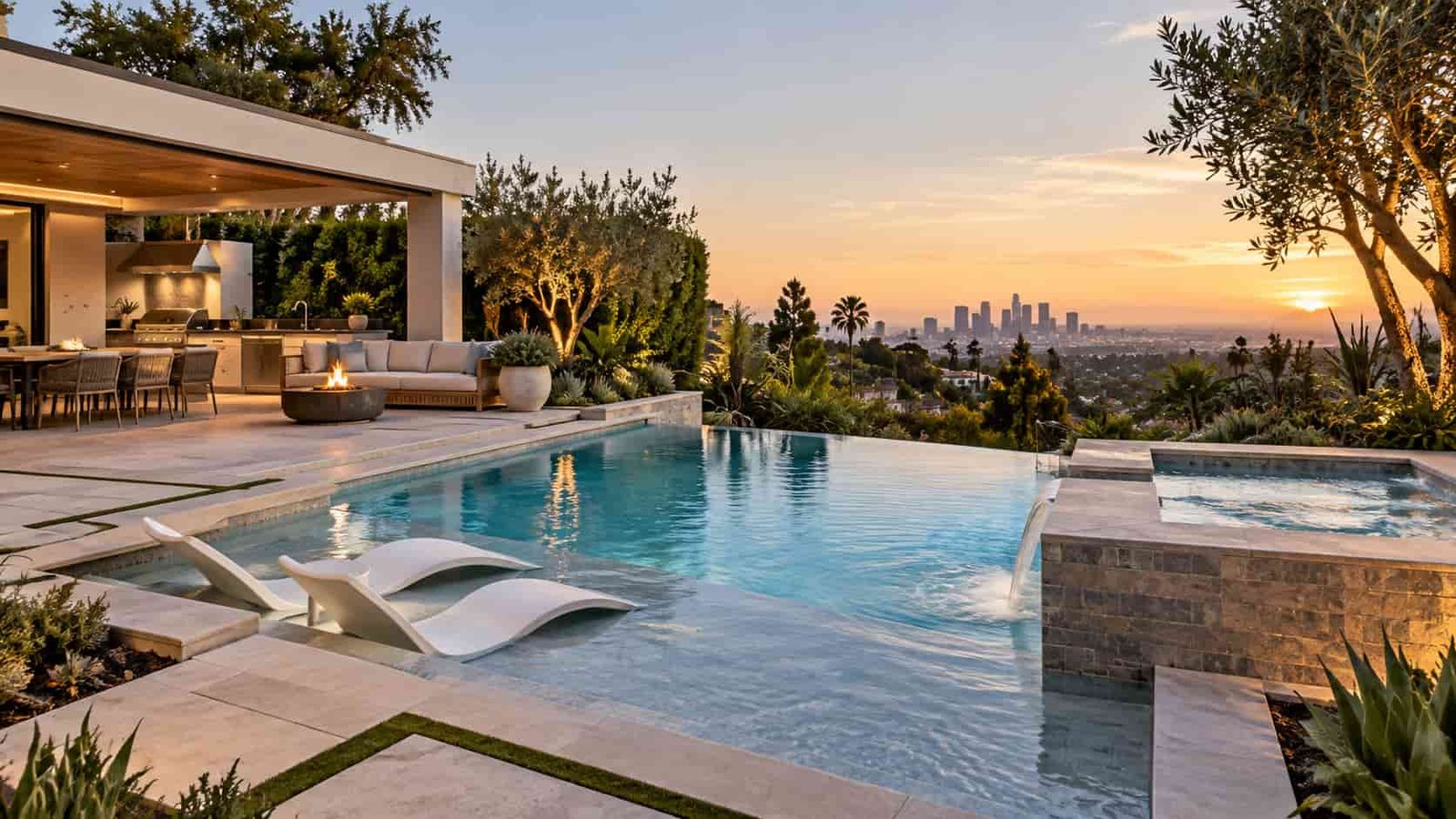
7. Final Inspection and Pool Start-Up
Before the pool is ready for regular use, the final systems must be checked and commissioned.
The closing stage can involve testing equipment, checking plumbing and electrical systems, preparing and balancing the water, confirming automation settings, cleaning the site, completing outstanding finish work, and addressing required inspections.
The exact inspection process depends on the jurisdiction and scope of construction. Final approval should be considered part of the project schedule rather than something that happens automatically as soon as construction work appears complete.
What Can Make a Luxury Pool Take Longer to Build?
Luxury pool schedules can change because of both design decisions and conditions on the property.
Some of the most common factors include:
- Complex pool shapes
- Larger pool dimensions
- Custom architectural features
- Hillside or sloped properties
- Restricted access for excavation equipment
- Unexpected soil conditions
- Extensive excavation
- Retaining walls
- Drainage improvements
- Specialty materials with long lead times
- Multiple water features
- Integrated spas
- Infinity or vanishing edges
- Extensive landscaping
- Outdoor kitchens and entertainment areas
- Permit or inspection delays
- Weather or unsuitable site conditions
- Material availability
- Design changes after construction starts
Not every luxury pool will involve these issues. However, the more interconnected elements a project includes, the more important scheduling and coordination generally become.
Project scope also affects both schedule and budget. Homeowners evaluating the overall investment may want to consider luxury pool cost in Los Angeles alongside the construction timeline because many of the same design and site variables influence both.
Does a Custom Luxury Pool Take Longer to Build?
A custom luxury pool can require more time than a straightforward installation, but customization does not automatically mean that every project will experience a long construction schedule.
The difference is usually the amount of planning and coordination involved.
A relatively simple pool design may use conventional dimensions, commonly available materials, and fewer integrated features. A highly customized pool might include a vanishing edge, spa, custom tile layout, unusual geometry, water features, structural retaining work, automation, and extensive surrounding hardscape.
Each additional element may require design coordination, engineering, specialty contractors, material procurement, or additional installation work.
For that reason, it is generally more useful to evaluate the specific scope of a custom pool than to assume that every luxury project takes a predetermined number of weeks.
How Long Does It Take to Build a Luxury Pool in Los Angeles?
Building a luxury pool in Los Angeles involves many of the same construction phases found elsewhere, but local properties can introduce additional considerations.
Permitting is one important factor. Requirements depend on the property’s jurisdiction and project scope. For properties under Los Angeles County Public Works, pools and spas have their own permit category, while related grading, plumbing, electrical, or other work may also be relevant depending on the project.
Property characteristics can be equally important.
Los Angeles includes flat suburban lots, dense neighborhoods, hillside homes, and properties with limited side-yard or equipment access. A pool project may therefore need to account for:
- Hillside or sloped terrain
- Grading requirements
- Drainage
- Retaining structures
- Restricted construction access
- Existing buildings or landscape elements
- Demolition before excavation
- Equipment placement
- Coordination with patios and landscaping
For projects involving substantial grading or drainage work, additional engineering and plan review may also be relevant. Los Angeles County identifies grading plans and stormwater drainage systems among projects that can require engineering review through its land-development process.
Because these variables differ from property to property, homeowners should establish a project-specific schedule after the site, design, desired features, and approval requirements have been evaluated.
Luxury Pool Construction Timeline vs. Standard Pool
The distinction between standard and luxury pool construction is less about a specific number of weeks and more about project complexity.
| Factor | Standard Pool | Luxury / Custom Pool |
| Design | More straightforward | Highly customized |
| Materials | Standard options | Premium or custom options |
| Features | Basic | Multiple integrated features |
| Engineering | Project dependent | Often more involved |
| Site Work | May be simpler | Can involve complex site conditions |
| Construction Timeline | Project dependent | Often more variable |
A luxury pool may therefore require additional planning even when the pool itself is not particularly large. Material selection, architecture, water features, landscaping, automation, and surrounding outdoor living elements can all create additional dependencies in the schedule.
How to Avoid Unnecessary Delays During Pool Construction
Some schedule changes cannot be prevented, particularly those related to permit review, weather, unforeseen site conditions, or inspections. However, careful planning can reduce avoidable delays.
Finalize the Design Early
Make major decisions about pool dimensions, shape, finishes, features, and surrounding spaces before construction begins whenever possible.
Changing structural or mechanical elements after work has started can affect several later stages.
Confirm Materials Before Construction
Identify specialty tile, coping, finishes, lighting, equipment, and other important materials early.
This gives the project team an opportunity to account for product availability and lead times when developing the construction sequence.
Understand the Permitting Process
Determine which approvals and plan reviews apply to the property before setting expectations for the construction start date.
A schedule based only on excavation and building time can underestimate the complete project duration.
Discuss Site Access in Advance
Excavation equipment, material deliveries, soil removal, and construction crews all need access to the site.
Limited access should be identified during planning rather than after excavation is scheduled.
Identify Grading and Drainage Issues
Properties with slopes, retaining walls, significant elevation changes, or drainage challenges may require additional preparation and engineering.
Addressing these issues early allows them to become part of the project plan.
Minimize Major Design Changes During Construction
A seemingly simple design change may affect structural work, plumbing, electrical systems, materials, or inspections.
Finalizing important decisions before work starts can help keep construction moving.
Coordinate Landscaping and Outdoor Living Work
If the project includes patios, landscaping, an outdoor kitchen, pergola, fire feature, or other improvements, determine how those components interact with pool construction.
Sequencing the work correctly can prevent one contractor from interfering with completed work from another.
Establish a Clear Construction Schedule
Before construction starts, homeowners should understand the major phases, expected dependencies, inspection points, and decisions they will need to make.
The schedule may still change, but a clear framework makes those changes easier to manage.
When Should You Start Planning a Luxury Pool?
Planning should begin well before the date you hope to use the finished pool.
The total project timeline includes much more than physical pool construction. Concept development, site assessment, design revisions, engineering, permitting, material selection, excavation, construction, finishes, inspections, landscaping, and start-up may all occur before the project is complete.
Starting early also provides more flexibility if a selected material has a long lead time, plans require revisions, or the property needs additional structural, drainage, or grading work.
Rather than working backward from an assumed construction period, homeowners can discuss their preferred completion window with the project team and build a schedule around the actual scope of work.
Frequently Asked Questions
How Long Does It Take to Build a Luxury Pool?
There is no universal construction period for a luxury pool. The schedule depends on the design, permitting requirements, site conditions, engineering, materials, custom features, inspections, and surrounding outdoor work. Construction itself may take several weeks, but the complete project also includes design, approvals, and final commissioning.
Does a Custom Pool Take Longer to Build?
It can. Custom shapes, specialty materials, integrated spas, infinity edges, water features, unusual structural requirements, and extensive outdoor living improvements can require additional design and construction coordination. The actual impact depends on the individual project.
What Part of Pool Construction Takes the Longest?
There is no single stage that is always the longest. Permit review may be significant on one project, while excavation, structural work, custom finishes, or material procurement may have a greater impact on another.
Can Weather Delay Luxury Pool Construction?
Yes. Weather can affect excavation, grading, concrete-related work, exterior finishes, landscaping, and general site conditions. The impact depends on what work is scheduled when the weather occurs and whether the site remains suitable for construction.
Do Permits Add Time to Pool Construction?
Yes. Permit applications, plan checks, revisions, approvals, and required inspections are part of the overall development process and should be considered when establishing a realistic project schedule.
How Long Does It Take to Build a Luxury Pool in Los Angeles?
The timeline varies by property and project. Los Angeles homeowners need to account for design and engineering, the applicable permitting process, site access, excavation conditions, slopes or grading where relevant, custom features, materials, inspections, and any surrounding landscape or outdoor living improvements.
Can Landscaping and an Outdoor Kitchen Be Completed at the Same Time?
In some projects, portions of this work can overlap, while other activities need to occur in sequence. The answer depends on site access, utility work, pool construction, hardscape installation, and the contractors involved. Coordinating these components as part of a broader site plan can help prevent conflicts.
Plan Your Luxury Pool Around the Property, Not a Generic Timeline
The best answer to how long does it take to build a luxury pool comes from evaluating the actual project rather than relying on a fixed industry timeline. Pool design, engineering, permits, access, excavation, structural requirements, finishes, landscaping, and custom features can all affect how the work progresses.
If you are planning a custom pool in Los Angeles, discuss your property, desired design, site conditions, outdoor living plans, and preferred completion window with Struxa Group. A project-specific review can help establish a more realistic construction sequence and timeline before work begins.