
Signs It’s Time to Remodel


Knowing the signs it’s time to remodel can help homeowners distinguish between a property that simply needs a few updates and one that would benefit from more significant improvements. A home does not necessarily need remodeling just because its style feels dated. More practical reasons may include an inefficient layout, recurring maintenance problems, outdated systems, limited storage, or spaces that no longer support the way your household lives.
For homeowners considering home remodeling in Los Angeles, the decision should start with identifying the problems the project is expected to solve. Looking at functionality, condition, future plans, and the relationship between different areas of the home can make it easier to determine whether repairs, a single-room renovation, or a larger remodel is appropriate.
| Sign | What It May Indicate | Possible Remodeling Approach |
| Layout no longer works | Poor flow or changing household needs | Reconfiguration |
| Recurring repairs | Underlying property or system issues | Evaluation and renovation |
| Limited usable space | Inefficient use of existing rooms | Functional redesign |
| Outdated systems | Electrical, plumbing, HVAC, or lighting concerns | Coordinated upgrades |
| Several rooms need work | Projects may overlap | Broader remodeling plan |
| Kitchen or bathroom is difficult to use | Storage, layout, or fixture limitations | Room remodel |
10 Signs It’s Time to Remodel Your Home
Several home remodeling signs are more meaningful than appearance alone. Functionality, condition, recurring problems, and changing household requirements are often stronger indicators that a renovation deserves consideration.
1. Your Home No Longer Fits Your Lifestyle
One of the clearest signs you need to remodel your home is when the property no longer supports everyday life. A growing household may need additional storage, someone working remotely may need a dedicated office, or changing accessibility requirements may make certain rooms difficult to use.
Some homes have enough square footage but use it inefficiently. Reconfiguring rooms, creating multi-purpose spaces, improving storage, or changing circulation can sometimes make the existing footprint much more practical without necessarily increasing the overall size of the home.
2. The Layout Is Difficult to Use
A layout that consistently creates inconvenience can be a stronger reason to remodel than outdated finishes. Poor room flow, closed-off living areas, awkward furniture placement, limited connections between rooms, and underused spaces can all affect how comfortable a home feels.
Kitchen layouts are a common example. If appliances, counters, storage, and circulation do not work well together, replacing cabinet finishes alone may not address the real problem. A remodel can provide an opportunity to reconsider how the room functions as part of the wider home.
3. You Keep Repairing the Same Problems
Occasional maintenance is normal, but repeatedly repairing the same issue may indicate that a surface-level solution is no longer enough.
Recurring water damage, deteriorating finishes, persistent plumbing issues, damaged flooring, or repeated electrical problems should be investigated before cosmetic remodeling begins. Significant building or system problems should be assessed by appropriately qualified professionals so that any underlying issue is understood before renovation work is planned.
4. Your Kitchen or Bathroom No Longer Meets Your Needs
Kitchens and bathrooms are heavily used spaces, making functional problems particularly noticeable. Insufficient storage, limited countertop space, poor lighting, worn cabinetry, inefficient layouts, dated fixtures, or difficult-to-use work areas may all be signs your home needs remodeling.
The goal does not always need to be a complete redesign. The appropriate scope depends on which problems need solving. Some homes may benefit from focused updates, while others require layout, cabinetry, plumbing, lighting, and finish changes to work effectively.
5. Your Home Feels Outdated
Outdated interiors alone do not mean that a property requires renovation. Design preferences change, and an older finish may still be completely functional.
However, remodeling may make more sense when dated elements are combined with practical problems. Older cabinetry that provides poor storage, lighting that does not adequately serve a room, worn surfaces, ageing doors and windows, or inconsistent materials throughout the property can create both functional and visual reasons to update the home.
6. You Need More Functional Space
Needing more usable space does not always mean needing a larger house. Sometimes the issue is how the existing square footage is organised.
A remodel can potentially create built-in storage, a home office, a larger or more practical kitchen, better-designed living areas, or rooms that serve more than one purpose. In other situations, homeowners may explore adding usable space where the property and project requirements make that feasible.

7. Your Home Has Outdated Windows, Doors, or Finishes
Windows, doors, flooring, wall finishes, cabinetry, and other architectural elements affect how a home looks, feels, and functions. Components that are difficult to operate, visibly deteriorated, inconsistent with surrounding spaces, or increasingly difficult to maintain may justify replacement as part of a larger renovation.
Coordinating these elements during a remodel can also help create a more consistent design rather than replacing individual components at different times without considering the overall interior or exterior.
8. Your Home’s Systems Need Major Updates
Another important answer to when to remodel your home is when building systems require substantial work. Electrical systems, plumbing, HVAC, insulation, lighting, and other infrastructure can sometimes affect several rooms at once.
These improvements should be based on the property’s actual condition and applicable requirements rather than age alone. When major system work is necessary, homeowners may choose to coordinate it with remodeling so walls, ceilings, flooring, cabinetry, and finishes do not need to be disturbed multiple times.
9. You’re Planning a Major Change in How You Use the Home
Homes often need to evolve with the people living in them. A spare bedroom may need to become an office, an underused room may need a new function, or a household may want more flexible entertainment and gathering areas.
Other homeowners may need to accommodate ageing family members or changing accessibility requirements. When the way a room needs to function is fundamentally changing, renovation can provide more flexibility than simply replacing furniture or finishes.
10. You Are Considering Multiple Separate Renovation Projects
If the kitchen, flooring, lighting, bathrooms, doors, and other areas all need attention, completing them as unrelated projects may not always be the most practical approach.
A broader remodeling plan allows homeowners and contractors to consider how the projects interact. Plumbing, electrical work, flooring transitions, material choices, access, construction sequencing, and design consistency may be easier to coordinate when the home is evaluated as a connected project.
Remodeling vs. Simple Repairs: How Do You Know Which You Need?
Not every problem requires a major renovation. Small, isolated issues are often better addressed through repairs or targeted updates, while broader functional or system-related problems may justify remodeling.
| Situation | Repair or Small Update | Larger Remodel |
| Minor cosmetic damage | ✓ | |
| One isolated fixture needs replacement | ✓ | |
| Layout no longer works | ✓ | |
| Multiple rooms need coordinated changes | ✓ | |
| Recurring problems across several areas | ✓ | |
| Major plumbing or electrical changes | ✓ | |
| Need to change how rooms are used | ✓ | |
| Finishes are simply dated | Depends on goals | Depends on scope |
The best approach depends on the property’s condition, your priorities, budget, future plans, and the extent to which different projects affect one another. A cosmetic update can be appropriate when the underlying space already works well, whereas layout or system problems may require a larger scope.
Should You Remodel Your Whole House or One Room at a Time?
Remodeling one room at a time can make sense when projects are independent, priorities are clear, or homeowners want to spread work across multiple phases. A kitchen remodel, for example, may be relatively self-contained if the rest of the home does not require related changes.
A whole-home or coordinated renovation may be worth considering when several rooms require work or when one project affects another. Structural changes, electrical and plumbing upgrades, continuous flooring, consistent finishes, and layout changes can make coordination particularly important. Budget, timeline, availability during construction, and material selections should all be considered before choosing between phased and larger-scale remodeling.
Signs Your Home May Need a Functional Upgrade, Not Just a Cosmetic Remodel
Some home renovation signs indicate that changing paint, finishes, or fixtures will not solve the underlying problem. Poor circulation, insufficient storage, awkward room layouts, limited lighting, accessibility concerns, deteriorated components, or outdated electrical and plumbing systems may require more substantial planning.
The key distinction is whether the project is changing how the home looks or how it works. A design refresh focuses primarily on appearance. A functional remodel may involve layouts, systems, storage, circulation, architectural elements, or the way rooms connect and are used.
When Is the Right Time to Remodel in Los Angeles?
There is no single season that is automatically the best time for every home renovation Los Angeles project. The right timing depends more on planning requirements, project scope, contractor scheduling, material availability, property conditions, and whether several types of work need to be coordinated.
Larger projects may also involve permitting, design development, engineering, material selection, or other pre-construction steps before physical work begins. Starting the planning process well before your desired construction period can give you more time to define the scope, compare contractors, address project requirements, and make major selections.
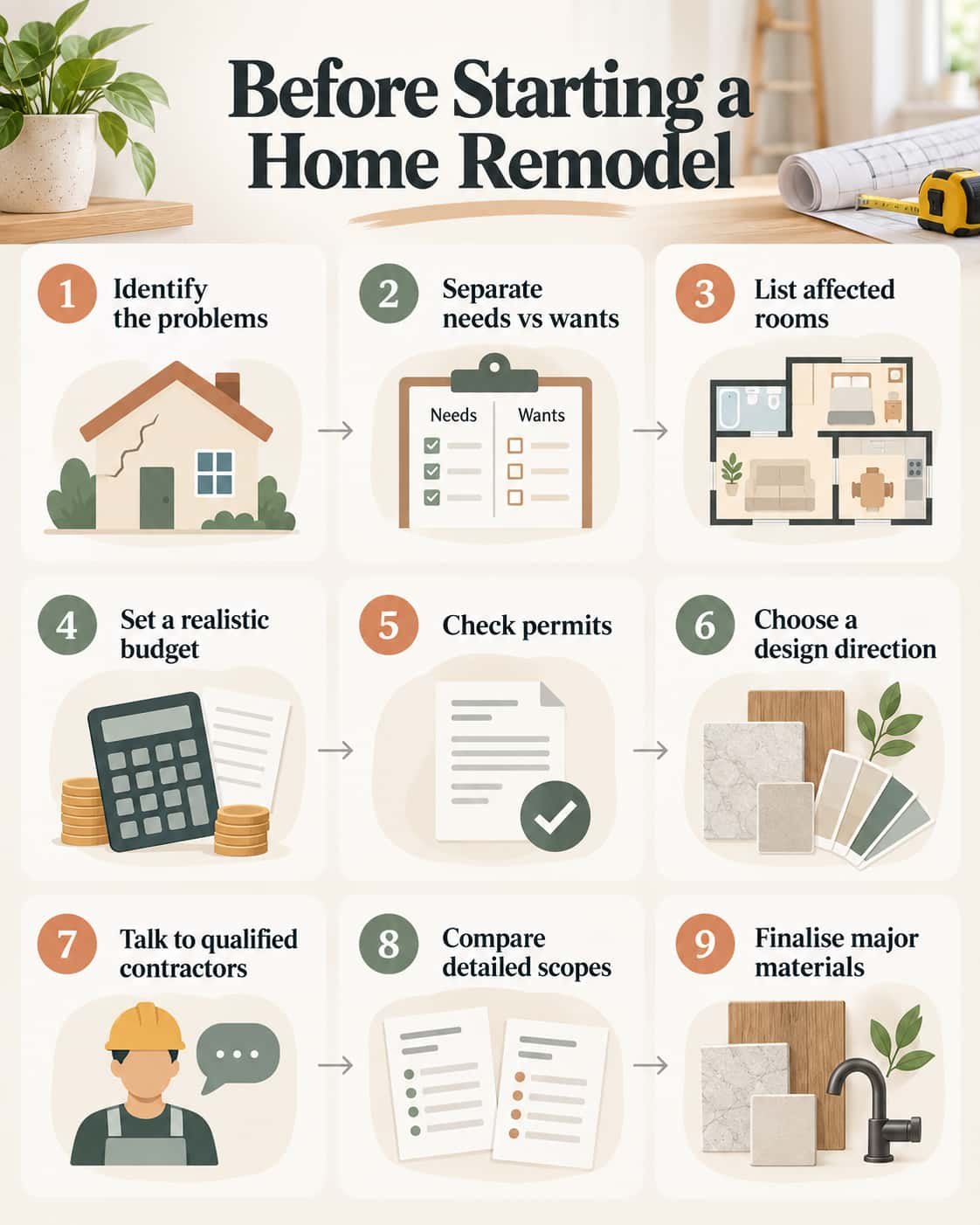
What to Do Before Starting a Home Remodel
A well-defined scope can make discussions with a Los Angeles remodeling contractor more productive. Before starting construction:
- Identify the specific problems you want the remodel to solve.
- Separate essential improvements from cosmetic preferences.
- Determine which rooms, components, and systems are affected.
- Establish a realistic project budget.
- Research applicable permits and project requirements.
- Define your preferred design direction.
- Speak with qualified remodeling contractors.
- Compare detailed scopes rather than looking only at overall estimates.
- Finalise major material selections before construction where practical.
The more clearly the project is defined before work begins, the easier it becomes to compare proposals and understand what is and is not included in each contractor’s scope.
How Much Does It Cost to Remodel a Home in Los Angeles?
There is no single price that accurately represents every home remodel Los Angeles project. Remodeling costs depend on the number of rooms involved, project size, layout changes, material choices, cabinetry, appliances, plumbing and electrical work, structural modifications, permits, labour requirements, and finish level.
A limited room update and a major whole-home renovation involve very different scopes, so homeowners should base budgeting decisions on the actual work required. If available, a detailed guide to remodeling or kitchen remodeling costs in Los Angeles can provide additional context before requesting project-specific estimates.
Frequently Asked Questions
How do I know if my house needs remodeling?
Remodeling may be worth considering when the layout, condition, building systems, storage, or functionality of your home no longer supports your household’s needs. Recurring repairs or several connected improvement projects can also be important indicators.
What are the biggest signs you need to remodel your home?
Some of the strongest signs include an inefficient layout, recurring maintenance issues, insufficient functional space, outdated systems, and multiple rooms that require coordinated improvements.
Is it better to remodel or move?
It depends on factors such as location, available space, the scope of the renovation, budget, future household requirements, and how strongly you want to remain in the property. Comparing the practical and financial implications of both options can help determine which makes more sense.
Should I remodel one room or the entire house?
A single-room renovation may be appropriate when the project is largely independent. A broader remodel may make more sense when several areas require work or when layout, plumbing, electrical, structural, flooring, or design changes affect multiple rooms.
How often should a home be remodeled?
There is no universal remodeling schedule. Signs it’s time for a home renovation are generally related to the property’s condition, functionality, changing household needs, and homeowner goals rather than a fixed number of years.
What should I remodel first?
Prioritise safety concerns, structural or building-system issues, recurring problems, and functional limitations before purely cosmetic improvements. Projects that affect other planned renovations—such as electrical, plumbing, structural, or layout changes—should also be considered early in the planning process.
Is It Time to Remodel Your Home?
The most important signs it’s time to remodel go beyond whether a home looks old. An inefficient layout, recurring repairs, inadequate storage, outdated systems, changing household requirements, and several connected renovation needs may all indicate that a larger improvement project deserves consideration.
Before starting a remodel, identify what is not working, decide which improvements are most important, and evaluate how individual projects interact. For homeowners planning home remodeling in Los Angeles, developing a coordinated scope with a qualified contractor can help determine whether targeted upgrades, phased renovations, or a broader home remodel best fit the property’s needs.